SENIOR THESIS

HiveHarmony

A Sustainable Beehive System for Efficient Space and Seamless Colony Management

Liam Hyde

Industrial / Product Design

THE PROBLEM & THE OPPORTUNITY

America's Vanishing Honeybees

The United States is the only country in the world currently experiencing a sustained decline in honeybee populations. Aggressive commercial agriculture relies on migratory beekeeping — trucking hives across the country to follow pollination contracts — which spreads disease and parasites between colonies and exposes bees to inconsistent pesticide loads.
Research combined academic literature review with direct interviews — beekeeping association members, a commercial-industry contact, and a hobbyist keeper managing roughly 15 hives in New England.

WHERE THIS PROJECT CAN HELP

This thesis can’t change U.S. agricultural practice — but it can act on what beekeepers and bees both control: hive design, accessibility, and bee comfort.
DESIGN PROCESS

Early form exploration

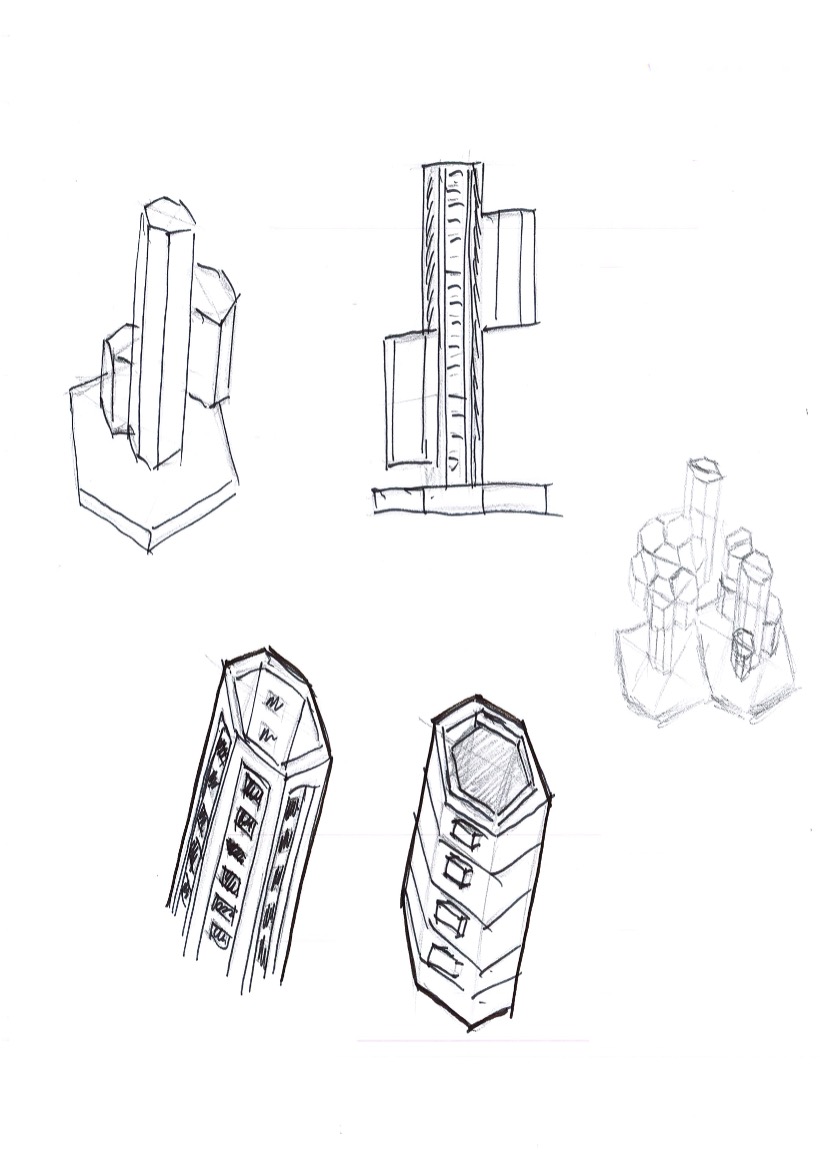
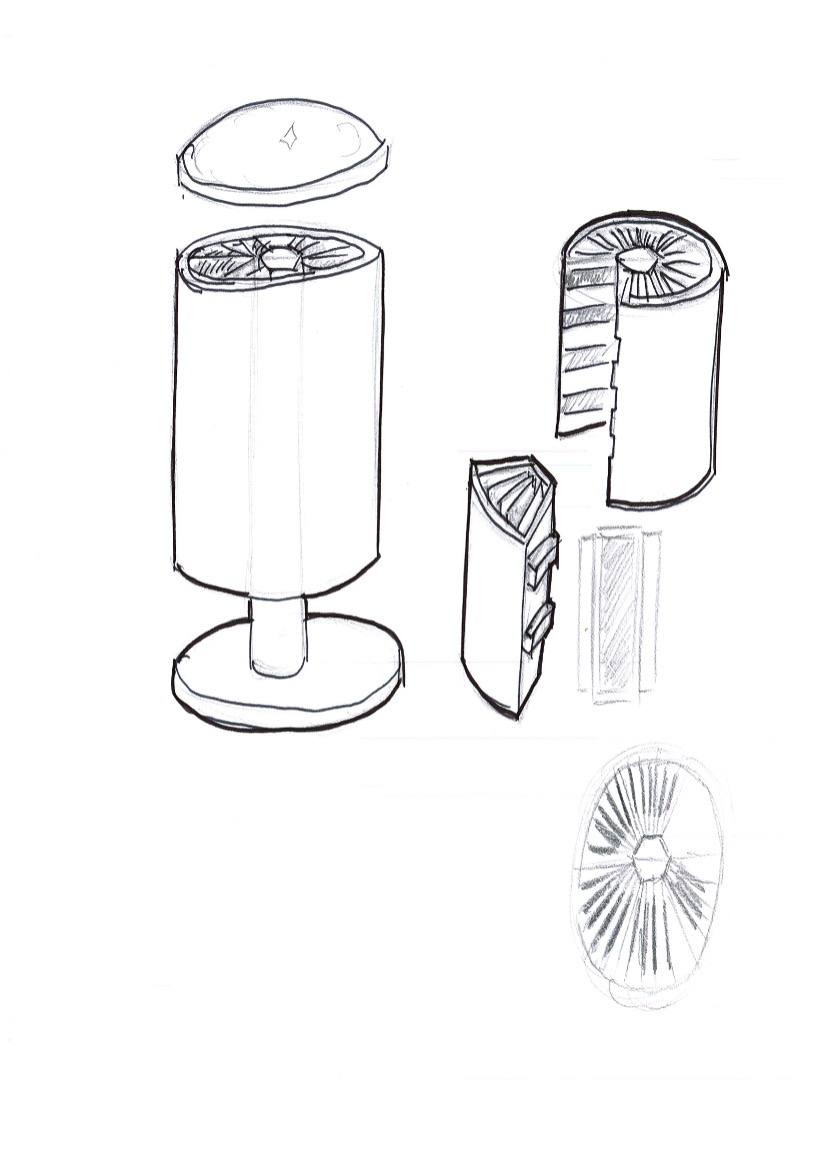
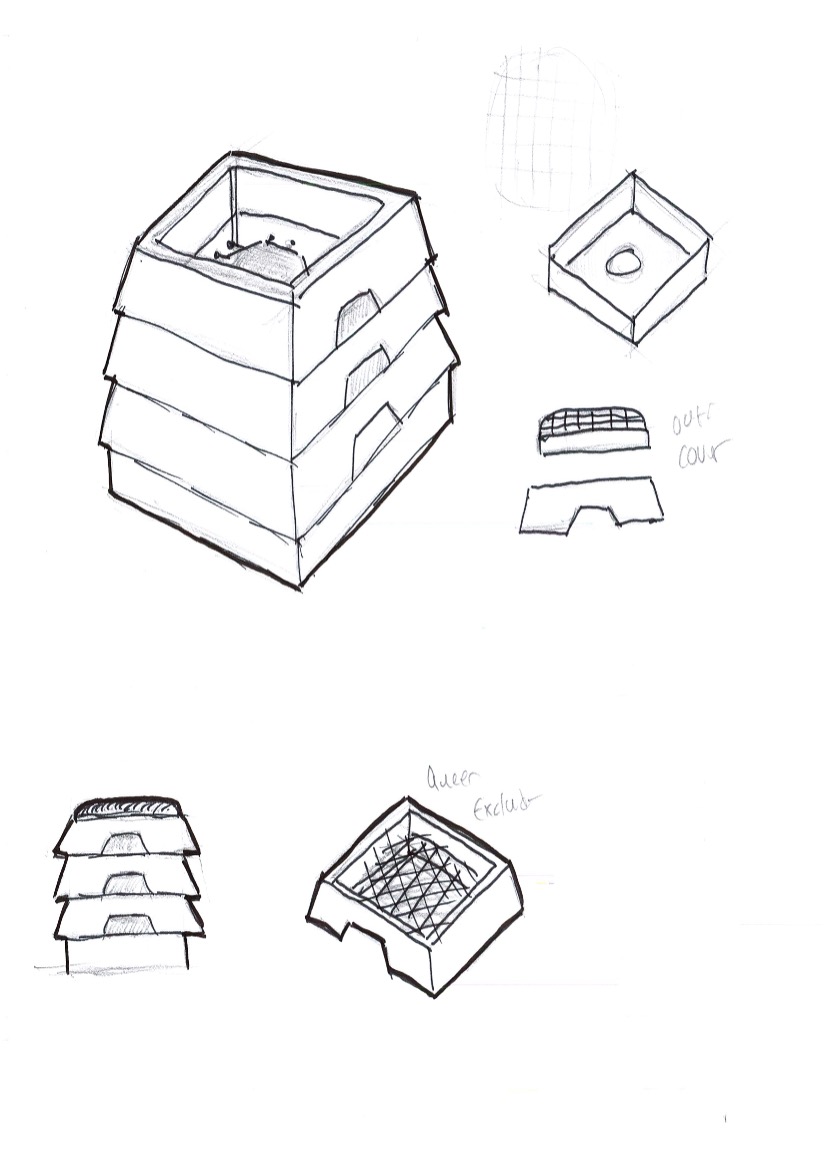
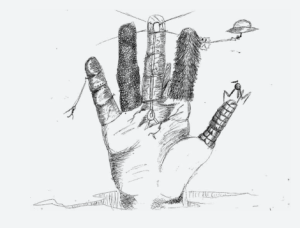
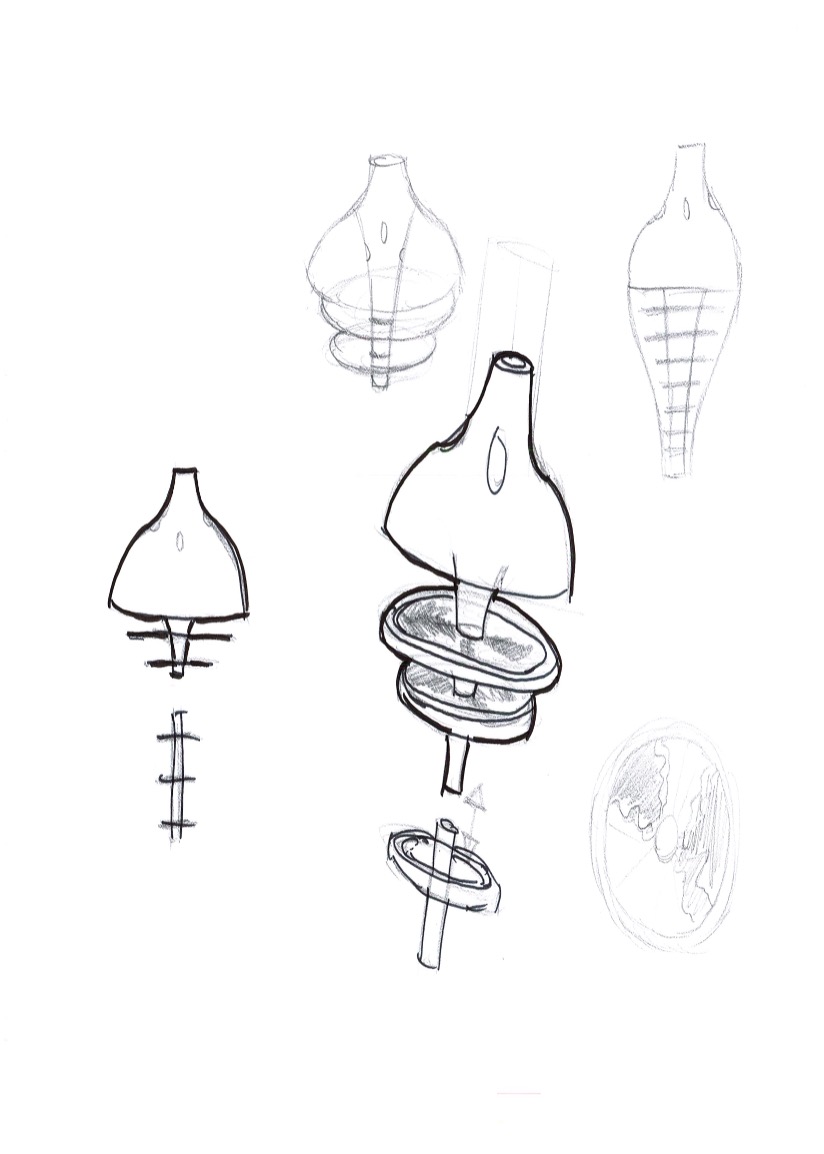
The first design phase moves away from the stacked-rectangular-box language of the Langstroth system, while keeping its core advantage: modularity. Sketches explore a tapered, vessel-like silhouette built from stacking “super” sections, plus hexagonal cross-sections referencing comb geometry and windowed panels for non-invasive viewing.

DESIGN PROCESS

Full-size cardboard study model

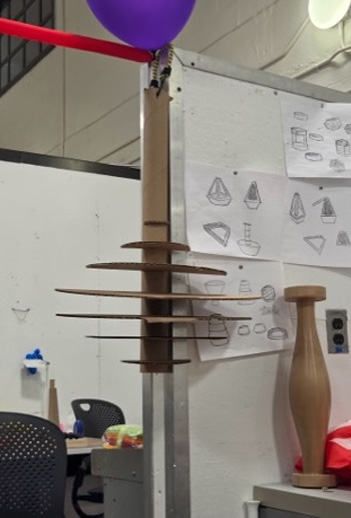
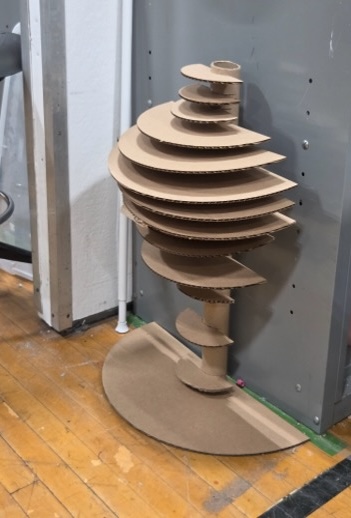
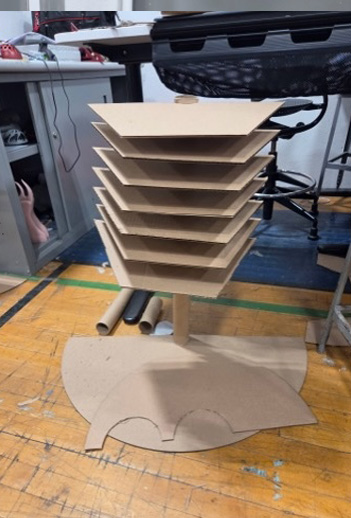
To validate proportions and the stacking logic at scale, the sketches were translated into a tapered tower built from a central spine with stacked disc-shaped layers. The model lets the form be evaluated in the round — checking how the taper, layer spacing, and modular stacking actually read as an object a beekeeper would interact with.
Next: integrate passive monitoring (weight, temperature, acoustic) into this silhouette without disrupting the bees.

RESEARCH FRAMEWORK

Three buckets, one foundation

1

Hive Design

The Langstroth hive is modular and harvest-friendly, but offers almost no visibility into colony health without opening the box — and disturbance itself stresses the colony.
How might a hive surface its own health data without disturbing the bees?

2

User Accessibility

Reading a hive by feel takes years to learn, and even veteran keepers disagree on best practice. Ergonomics matter too — most keepers report chronic back strain from low boxes.
How can hive state be understood — and inspected — faster and more comfortably?

3

Bee Comfort

Hive weight, temperature gradient, acoustic frequency, and honey chemistry all signal colony stress long before visible symptoms appear.

Comfort is the foundation the other two buckets sit on.

WHAT'S NEXT

From form to system

1

Module Geometry

Resolve super dimensions against real frame and comb spacing requirements.

2

Passive Monitoring

Integrate temperature, weight, and acoustic sensing into the form without disrupting the colony.

3

Climate Resilience

Material and insulation study tested against both high-heat and harsh-winter climates.

4

Ergonomics

Refine inspection and access points raised in the User Accessibility research.

SENIOR THESIS — IN PROGRESS

HiveHarmony

A Sustainable Beehive System for Efficient Space and Seamless Colony Management

Liam Hyde

Industrial / Product Design

THE PROBLEM & THE OPPORTUNITY

America's Vanishing Honeybees

The United States is the only country in the world currently experiencing a sustained decline in honeybee populations. Aggressive commercial agriculture relies on migratory beekeeping — trucking hives across the country to follow pollination contracts — which spreads disease and parasites between colonies and exposes bees to inconsistent pesticide loads.
Research combined academic literature review with direct interviews — beekeeping association members, a commercial-industry contact, and a hobbyist keeper managing roughly 15 hives in New England.

WHERE THIS PROJECT CAN HELP

This thesis can’t change U.S. agricultural practice — but it can act on what beekeepers and bees both control: hive design, accessibility, and bee comfort.
Drivers of decline:

  • Migratory commercial pollination
  • Disease & parasite spread (Varroa)
  • Inconsistent pesticide exposure
  • Urbanization & climate volatility

RESEARCH FRAMEWORK

Three buckets, one foundation

1

Hive Design

The Langstroth hive is modular and harvest-friendly, but offers almost no visibility into colony health without opening the box — and disturbance itself stresses the colony.
How might a hive surface its own health data without disturbing the bees?

2

User Accessibility

Reading a hive by feel takes years to learn, and even veteran keepers disagree on best practice. Ergonomics matter too — most keepers report chronic back strain from low boxes.
How can hive state be understood — and inspected — faster and more comfortably?

3

Bee Comfort

Hive weight, temperature gradient, acoustic frequency, and honey chemistry all signal colony stress long before visible symptoms appear.

Comfort is the foundation the other two buckets sit on.

DESIGN PROCESS

Early form exploration

The first design phase moves away from the stacked-rectangular-box language of the Langstroth system, while keeping its core advantage: modularity. Sketches explore a tapered, vessel-like silhouette built from stacking “super” sections, plus hexagonal cross-sections referencing comb geometry and windowed panels for non-invasive viewing.

DESIGN PROCESS

Full-size cardboard study model

To validate proportions and the stacking logic at scale, the sketches were translated into a tapered tower built from a central spine with stacked disc-shaped layers. The model lets the form be evaluated in the round — checking how the taper, layer spacing, and modular stacking actually read as an object a beekeeper would interact with.
Next: integrate passive monitoring (weight, temperature, acoustic) into this silhouette without disrupting the bees.

WHAT'S NEXT

From form to system

1

Module Geometry

Resolve super dimensions against real frame and comb spacing requirements.

2

Passive Monitoring

Integrate temperature, weight, and acoustic sensing into the form without disrupting the colony.

3

Climate Resilience

Material and insulation study tested against both high-heat and harsh-winter climates.

4

Ergonomics

Refine inspection and access points raised in the User Accessibility research.
Share :